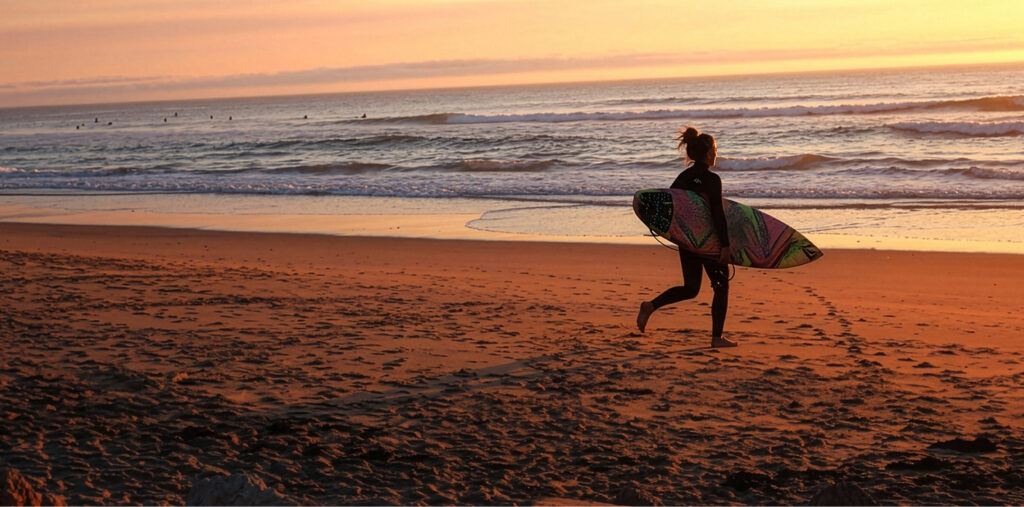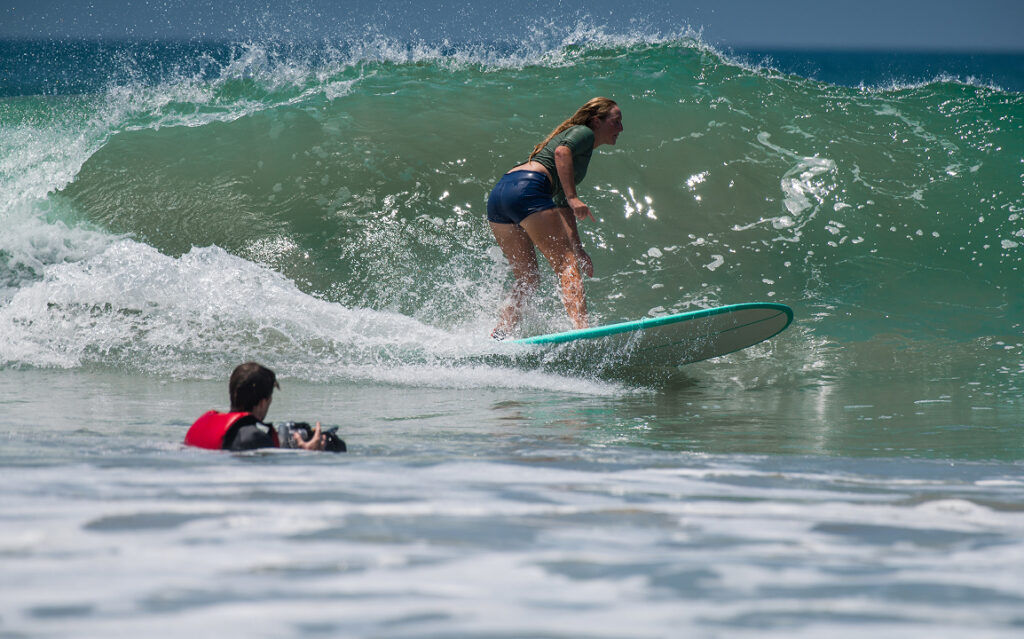


Welcome to the exhilarating world of surfing, where the adrenaline rush and the serenity of the ocean come together! If you’ve always dreamed of gliding over the waves, feeling the power of the sea, and connecting with nature in a unique way, this is your starting point. Catching your first wave is a magical moment—an unforgettable achievement that marks the beginning of a lifelong passion. At Wild Nature Surf Camp, located on the stunning beaches of Sines and Porto Covo, in the heart of the Alentejo and the Costa Vicentina, we know that every great surfer started exactly where you are right now: on the sand, with a mix of excitement and nervousness. We’re here to guide you on this journey, ensuring that your first experience is safe, fun, and, above all, memorable. Get ready to dive into this essential guide that will help you catch your first wave with confidence and joy.
1. Get to Know the Ocean and Its Rules
The ocean is a dynamic and powerful environment, and understanding it is the first step toward a safe and rewarding surfing experience. Before you go in the water, take some time to observe and learn about the ocean conditions. This is one of the most crucial tips for any beginner.
The Importance of Safety
Familiarize yourself with the currents, tides, and seabed conditions (sand, rocks) at the spot where you’ll be surfing. In Sines and Porto Covo, we have beaches with ideal conditions for beginners, but it’s essential to be aware of the dangers. Never surf alone, especially the first few times. Having an instructor or more experienced surfers around can make all the difference in case of unforeseen events. Safety is our top priority at Wild Nature Surf Camp, and our lessons are designed to give you the knowledge and confidence you need to take on the ocean.
Respect for Nature
Surfing is more than just a sport; it’s a way of life that demands respect for nature and for fellow surfers. Learn the rules of surf etiquette: who has priority on the wave, how to paddle without getting in the way, and the importance of keeping the ocean clean. The Costa Vicentina is a natural treasure, and we all have a responsibility to preserve it. At Wild Nature Surf Camp, we encourage a deep and respectful connection with the environment around us.
2. The Right Equipment Makes All the Difference
Choosing the right equipment is vital to your progress and safety. Good equipment for beginners will make learning easier and the process much more enjoyable.
The Perfect Surfboard
When you’re just starting out, foam boards (softboards) are your best friends. They’re more stable, float better, and are safer in the event of a crash. The size and volume of the board are important: the bigger and more voluminous it is, the easier it will be to paddle and catch waves. At Wild Nature Surf Camp, we provide boards suitable for all skill levels, ensuring you have the right equipment to start your adventure.
Neoprene Wetsuits and Accessories
A good-quality wetsuit is essential to protect you from the cold and possible abrasions. Even in Portugal, the water can be cool, and a suitable wetsuit allows you to spend more time in the water comfortably. Don’t forget your leash (the cord that attaches the board to your ankle, preventing it from getting lost) and wax, which provides grip on the board. These small details make a big difference in your experience.
3. Technique Starts on the Sand
You can’t catch a wave without mastering the basic technique, and the best place to start practicing is on the sand. Repeating the movements on dry land will build the muscle memory you’ll need when you’re in the water.
The Perfect “Pop-Up”
The “pop-up” is the movement of quickly standing up on the board. Practice it several times on the sand: lie down on the board, place your hands next to your chest, push yourself up, and bring your feet into the surfing position—all in one fluid, quick motion. Fluidity and speed are crucial. The more you practice, the more natural it will become. Our instructors at Wild Nature Surf Camp take the time to perfect this technique with students, as it is the foundation for catching a wave.
Position on the Board
While paddling, your position on the board should be centered, with your weight well distributed to maintain balance. If you’re too far forward, the board will “nose dive”; if you’re too far back, you’ll lose speed. Find your balance and keep your eyes on the horizon, not on your feet. A good paddling position is essential for catching waves more easily.
4. Patience and Persistence Are Key
Surfing is a journey, not a race. There will be falls, frustrations, and moments when you feel like you’re not making progress. But patience and persistence are your greatest allies.
Don’t Let Setbacks Get You Down
Falling is part of the learning process. All surfers fall, from beginners to pros. Every fall is an opportunity to learn and make adjustments. The important thing is to get back up, paddle out again, and try once more. The feeling of catching your first wave will be worth every effort and every dip in the water.
The Importance of Surf Lessons
Although it’s possible to learn on your own, surf lessons with qualified instructors significantly speed up your progress and ensure that you learn the correct techniques from the start. At Wild Nature Surf Camp, our experienced instructors offer personalized guidance, correct your mistakes, and share their knowledge of the ocean and the waves. Learning from experts is the most effective and safest way to improve your surfing.
5. Enjoy the Experience and Energy of the Sea
Above all, surfing is about having fun. Catching waves is just one part of the experience; the connection with nature, the energy of the ocean, and the surfing community are just as important.
Connection with Nature
Let yourself be swept away by the beauty of the Costa Vicentina, the sounds of the ocean, and the feel of the water. Surfing is an incredible way to unwind, get some exercise, and find inner peace. Sines and Porto Covo offer breathtaking scenery that makes every surf session even more special. It’s an opportunity to recharge your batteries and live in the moment.
The Surfing Community
Surfing is an individual sport, but one with a strong sense of community. Share your passion with other surfers, make new friends, and celebrate the small victories. At Wild Nature Surf Camp, you’ll find a warm, family-like atmosphere where a passion for surfing brings people from all over the world together. It’s more than just a camp—it’s a family.
Are you ready to experience the thrill of catching your first wave and embarking on an unforgettable adventure? At Wild Nature Surf Camp, we’re waiting for you to share our passion for surfing and nature. Book your vacation or surf lessons now and come discover the perfect waves of Sines and Porto Covo. Your adventure starts here!
Surf with soul, live with passion, be wild!
Frequently Asked Questions (FAQ)
1. What’s the best age to start surfing?
There’s no age limit for starting to surf! Children as young as 6–8 years old and adults of all ages can learn. The important thing is to be willing, have some physical ability, and seek proper instruction. Foam boards and tailored lessons make surfing accessible to everyone.
2. Do I need to be a really good swimmer to go surfing?
Yes, it’s essential to be able to swim comfortably. Although the leash keeps you attached to the board, it’s important to feel confident in the water and be able to swim to shore if necessary. Surf lessons always include safety instructions for the water.
3. How long does it take to catch your first wave?
With the right instruction and the right conditions, many beginners are able to catch their first “foam” (broken wave) as early as their first or second lesson. Catching a “green” wave (unbroken) may take a little longer, but progress is steady with practice.
4. What kind of surfboard should I use as a beginner?
For beginners, foam boards (softboards) are the most recommended. They are more stable, safer, and easier to paddle, which speeds up the learning process. Boards with greater volume and length also help with stability and paddling.
5. Is surfing dangerous for people who have never tried it?
Like any water sport, surfing has its risks, but these are minimized with proper instruction and adherence to safety rules. Starting with lessons at locations suitable for beginners and under professional supervision is the best way to ensure a safe and fun experience.
 TAGS:
TAGS: